
A Writing Experiment with My Phone’s Camera: Inspired by reading Sixty Morning Walks by Andy Fitch, and by the photographic walks of Richard Long
by Debi
WALK #1 — Roegner Park
Auburn, Washington USA
8:15am to 9:00am
Friday – January 16th, 2015
Pulling into the parking lot, there’s only one other car and that has a parking ticket on the dashboard. Seems like a clue I’ll have the park mainly to myself this morning.
 As I start my walk, I’m immediately faced with a dilemma. Turn right and walk toward the offleash dog park which is usually entertaining, or turn left and head toward the Humane Society at the far end of the trail. Hm. Realizing nobody else is at the park there won’t be any dogs running around in the dog park, so I turn left.
But that’s not the end of the decisions. Which trail to walk on? The dirt path for dogs, joggers, and horses, or the concrete path for walkers and strollers? I decide on the dirt path even though it’s a little soggy from an overnight rainstorm because I’ll be closer to the river and the trees.
 The sun isn’t fully up yet so it not only feels chilly, it looks chilly. Brr. Wouldn’t want to fall in the White River in January.
The only sounds I hear right now are crows in the trees, the sound of the river, and my footfalls. Two other people are in the park, sitting under a shelter talking. They look like high school students. Probably attend Riverside and are waiting for morning classes to start. The picnic shelter is taped off with bright yellow Caution tape. A little cautionary warning never seems to scare off high schoolers so they braved the dangers of the picnic shelter to have some quiet “alone” time. I feel like an intruder. Moving along.
 Although the wind is still today, some of the tall dried grasses still bear the effects of wind, pointing northwest. Usually the winds in this part of Auburn come up from the southwest so it surprises me a little to see evidence of prolonged southeast winds.
Looking through the trees across the river, I see the tops of several homes. A mobile home park is directly across the river from the park, but usually isn’t visible during the rest of the year when leaves are on the trees. I suspect those folks may have trouble with flooding during times of high water. Would make me uneasy, I think.
 If the path weren’t so damp, I might go down a side trail to be closer to the river. But I’m wearing my new shoes. Vanity wins out. I stay on the dry path. I hear a haunting rendition of Frost telling me that if I’d taken the path less traveled (the wet one), it would’ve made all the difference. Hush, Robert Frost. Let me enjoy my dry footpath without regrets.
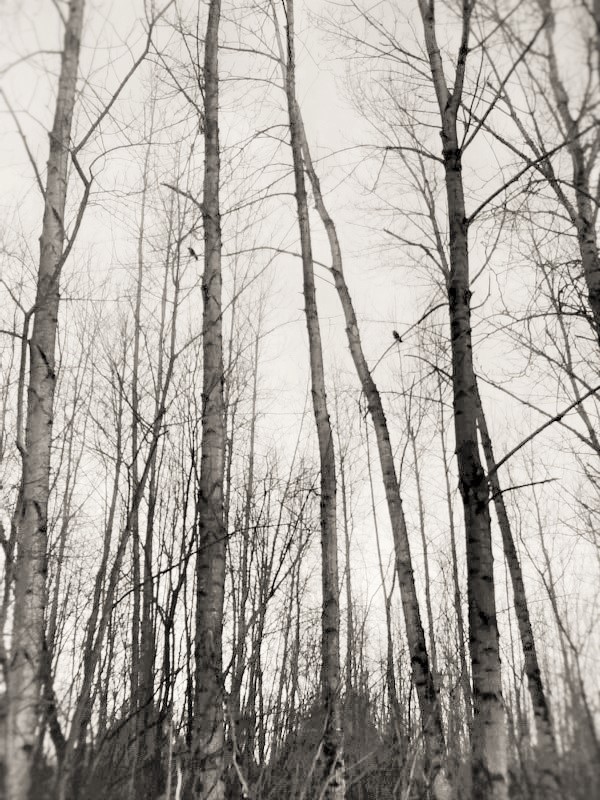 Crows. Pretty much the only birds I see or hear right now are crows. They scold me as I walk past. I talk to them like they’re my pet bunnies. “Hello, sweeties. Whatcha doin’? You’re so cute! Whatcha talkin’ about?” The crows just scold more. Fine, I won’t talk to you, then.
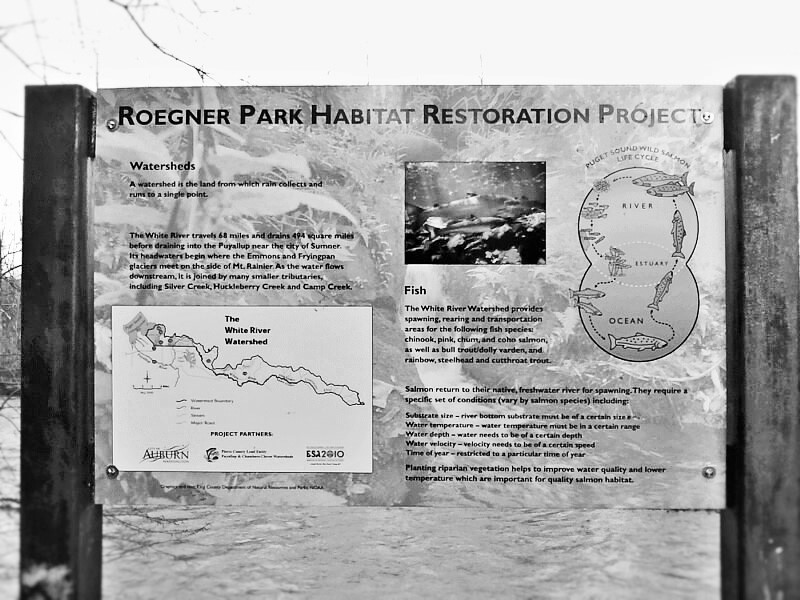 I’m glad the city has signage about the restorations projects going on in the park. Although not everyone reads the signs, it’s still a good reminder that parks and natural areas in the city limits don’t just “happen” without some effort from the city and its citizens.
The crows are still scolding. I think they’re following me as I walk. Hard to tell if it’s the same crows or if they’re just passing the scoldings off to their friends down the line.
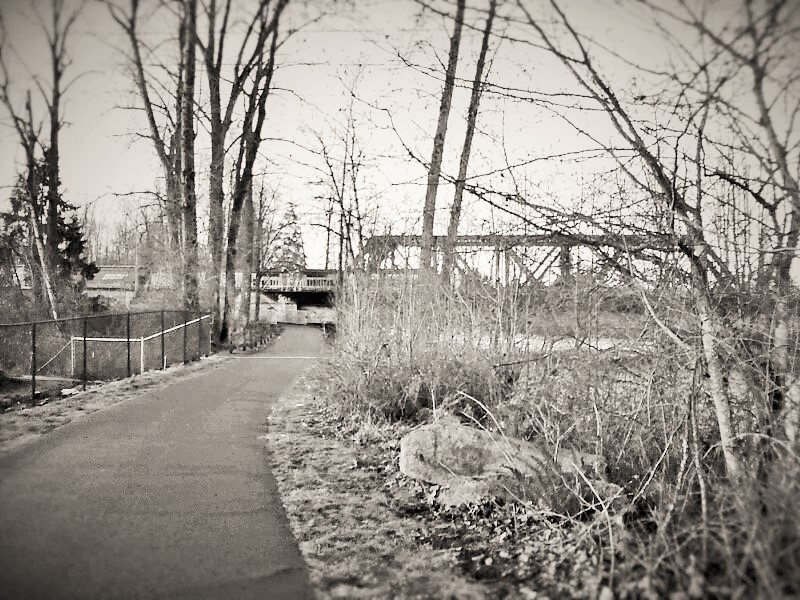 A train whistle in the distance. The sounds of cars on A Street SE. The river rushing. Oh, there’s the train now heading over the bridge across the river. I don’t think I’ve been walking here before when a train was actually going across the bridge. It’s a long train. Can’t see the end of it.
 Graffiti on the bridge. A reminder that this is a city park, not somewhere out in the country.
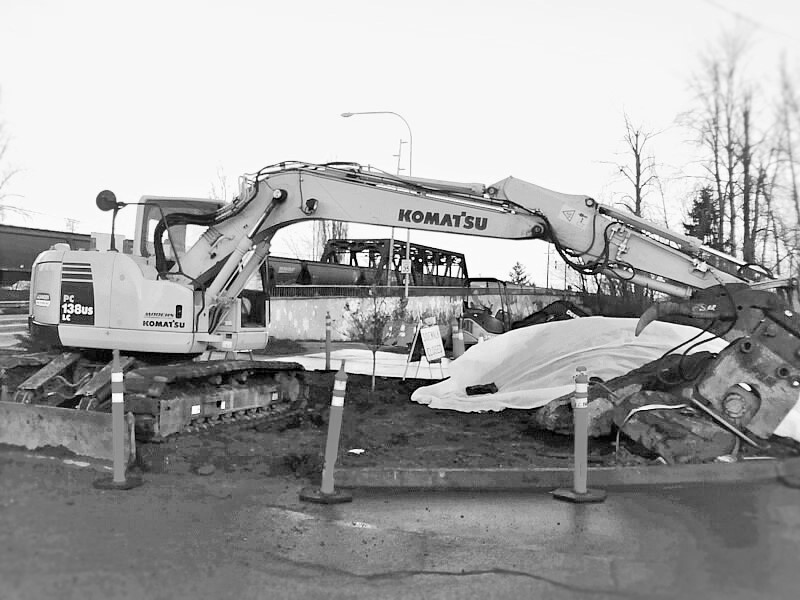 A backhoe parked by the street. I remember my kids loved going to Auburn’s Public Works department on Kids’ Day. They could sit in the cabs of the big “scoopers” and work the controls. Fun times. I wonder if they still let kids climb on the trucks and backhoes on Kids’ Day? It was a highlight of the year for the kids in Auburn.
 End of the trail. The Auburn Valley Humane Society isn’t open yet (not until 10am), but volunteers and workers are busy cleaning cages, emptying litterboxes, refilling food dishes, and walking the dogs. Two pit bulls look longingly at me when I stop by the dog window. Sorry, babies. I can’t come see you right now.
 The first cats that I see, don’t see me. They’re engrossed with watching the workers bringing food. I don’t blame them. I’m feeling a little hungry, myself. Time for second breakfast? I swear I’m part hobbit. Oh, there’s a kitty that looks like Ting! Hello, baby! I’d bring you home if I didn’t already have four cats and two bunnies. My motto now when it comes to cute animals is “Just say no!” Another cute kitty, this one is wearing the cone of shame and keeps reaching out its paws through the cage to try and reach me. Ahhhh. Sweet baby.
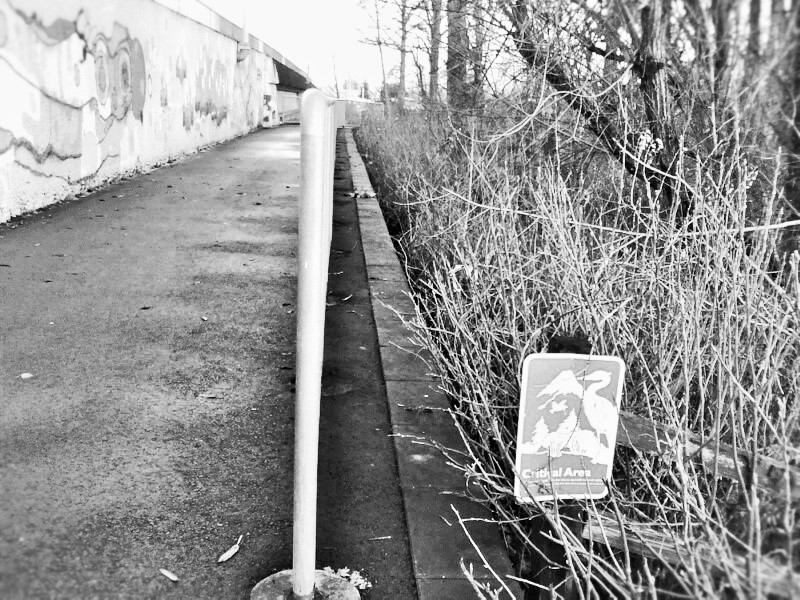 Heading back toward the park after peering in at the fur babies, a small sign about wetlands right next to the concrete trail, the road, the graffiti, and train tracks. Excellent reminder that wetlands are important not just in the countryside but maybe even more so in the city with all its pavements and impervious surfaces.
A small pond. A pair of mallards. Red-winged blackbird call. Can’t see him. The sun is beginning to peek over the hillside. Maybe direct sunlight before I’m done with my walk. Joy.
 White puffy “berries.” Someone told me once that if you step on them, they’ll pop. I try it. Squish. Must be too wet to pop. It squished and looked like an albino cranberry.
A few rays of sun starting to hit the tops of the trees by the river.
Now that the sun is starting to shine, I notice more birds. Not just the crows. A bunch of small birds … sparrows, chickadees, finches. A flock of flickers flew past! A pilated woodpecker hopping up and down the trunk of a tree! A gaggle of noisy Canada geese overhead!
 The trail at this end of the park is still empty. The playground equipment sits abandoned in the midst of a large puddle. The sky reflects off the surface. I try to get in close to take a photo of a small rocking toy my children used to play on when they were small, but the mud sucked my new shoes and I had to suffice with a photo of my footprints in the mud and the toy at a distance.
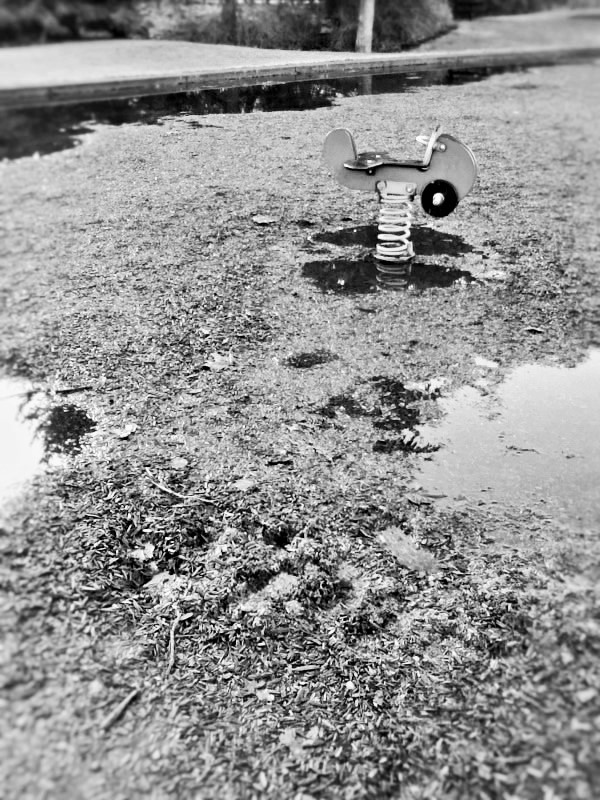 Lots of memories at this park. Playing alligators and detectives and hot lava with the neighborhood children nearly twenty years ago.
A rail for tying horses. Do people actually ride here? I’ve never seen a horse while at the park. Or droppings, for that matter.
 The bark on the tree looks jigsaw puzzle-esque. A couple of workers have arrived to open the restrooms. They stop and eye me (suspiciously?) while I try to take a close up of the tree bark.
The sun’s up. The park is coming alive. The dog walkers are arriving and unloading in the parking lot. Heading to the off-leash play area. Oh, a German shepherd. My favorite.
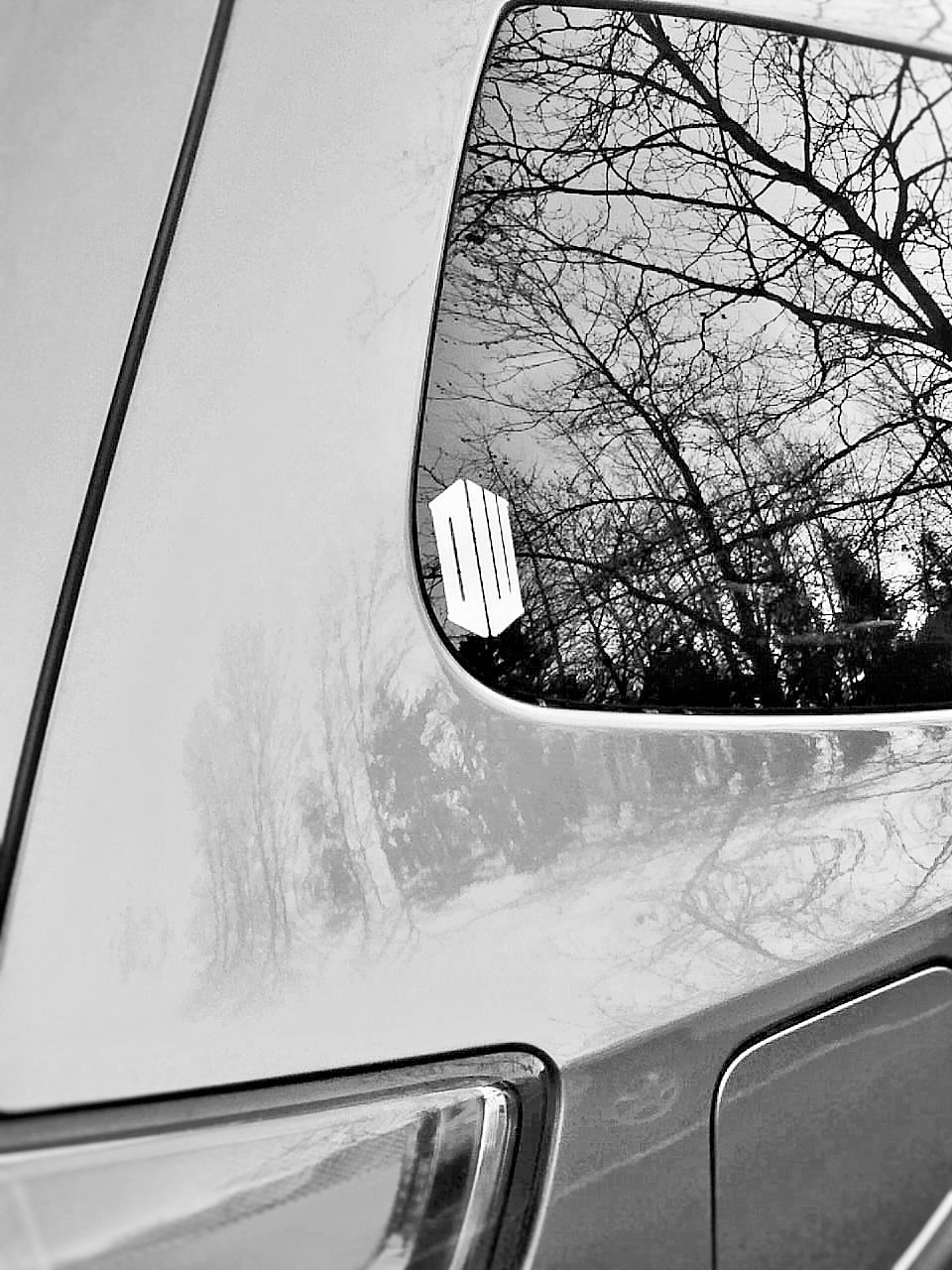 Where did I park? Oh, there’s the TARDIS sticker. Hello, car.
Home I go.
Although I may stop and grab 2nd breakfast … a hobbit’s gotta eat, you know.
Next Up: Walk #2 – Les Gove Park – Auburn, Washington


 by
by 

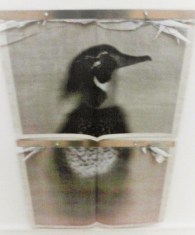
 Stepping into the main gallery spaces, there were sheets and sheets of newsprint with scanned images of dead birds, small mammals, and amphibians. Something about the scanned images looked like images you might see in a morgue. The only sound was the gentle rustling of the newsprint pages in the slight breeze in the room and the soft footsteps of the visitors. I found myself wondering what it would be like to be reading aloud in one of these silent rooms.
 Fast forward to all of us being given our reader/scribe implements and dispersing throughout the gallery to read to our chosen artifact. I chose a scanned image of a dead woodpecker. I found there was something disturbing about reading a “bedtime story” about a bird of prey killing birds much like my woodpecker. I almost felt like I wanted to apologize for disturbing its rest when I’d find a particularly graphic hunting section.
 Debi Taylor-Hough