Just-in-case storage

While sorting through some boxes in a storage space, I found a tub full of over-the-counter medications.  Allergy capsules, cold and flu medications, throat lozenges, pain meds, itch cream.  All of them were long since expired.  I’m sure I thought it was a good idea to stay stocked up on these items “just-in-case,” but when they ended up in an unseen storage spot and forgotten all about, they became nothing but a waste.

While it’s important to keep a supply of basic first aid items on hand, it’s not necessary to keep several years’ worth of medications.  I recently read an article on decluttering and the author said not to keep items that can be easily replaced for less than $20 in less than twenty minutes.  I don’t know how I feel about that.  For example, if I’m sick and need a cold and flu medication, I don’t want to have to run out to the store while I’m feeling ill.  So maybe having one bottle in the medicine cabinet wouldn’t be clutter. It’d just be practical and prepared.

But I realize that I actually do have a lot of “just-in-case” storage.  Not just meds, but also clothing, books, kitchenware.  When I’ve watched shows like Hoarders, it seems the people often begin with a keeping things “just-in-case” mindset, but then it gets out of control for them.   Stumbling across my hoard of just-in-case medicines today gives me a lot of food for thought.

Why do I keep the things I choose to keep?  Is it sometimes fear of the future?  Needing a sense of security?

Do you have items you keep around “just-in-case?”

Why are you decluttering?

One of the things I’ve found most helpful in this current round of decluttering is to keep in mind WHY I’m decluttering.  There have been times when I decluttered just to gain more space or for things to look nicer.  This time the reason is more pressing.  I’m preparing to move to a smaller space.

Yes, I’m in that stage of life where a four-bedroom home with two dining areas really no longer suits me.  Lots of extra space that’s not being used by anyone and never will be.

I’ll be moving at the end of the year to a new place that’s considerably smaller, so I’m going through every nook and cranny of my current house and parting with everything that I don’t want to have move with me.

So why am I decluttering?  Preparation for a move.  Which not only gives me a reason for decluttering, but also gives me a timeline for finishing.  I have plenty of time, but I don’t want to shrug it off and wait until the last minute.  So I find it helpful to keep in mind the WHY and the WHEN.  I don’t want to move, hauling around a bunch of unneeded stuff.  And I want to be ready to go when the movers show up.

I think keeping in mind the WHY of projects could be helpful in more areas than just declutter.  What’s the WHY for your latest project or big chore?

A decluttering treasure

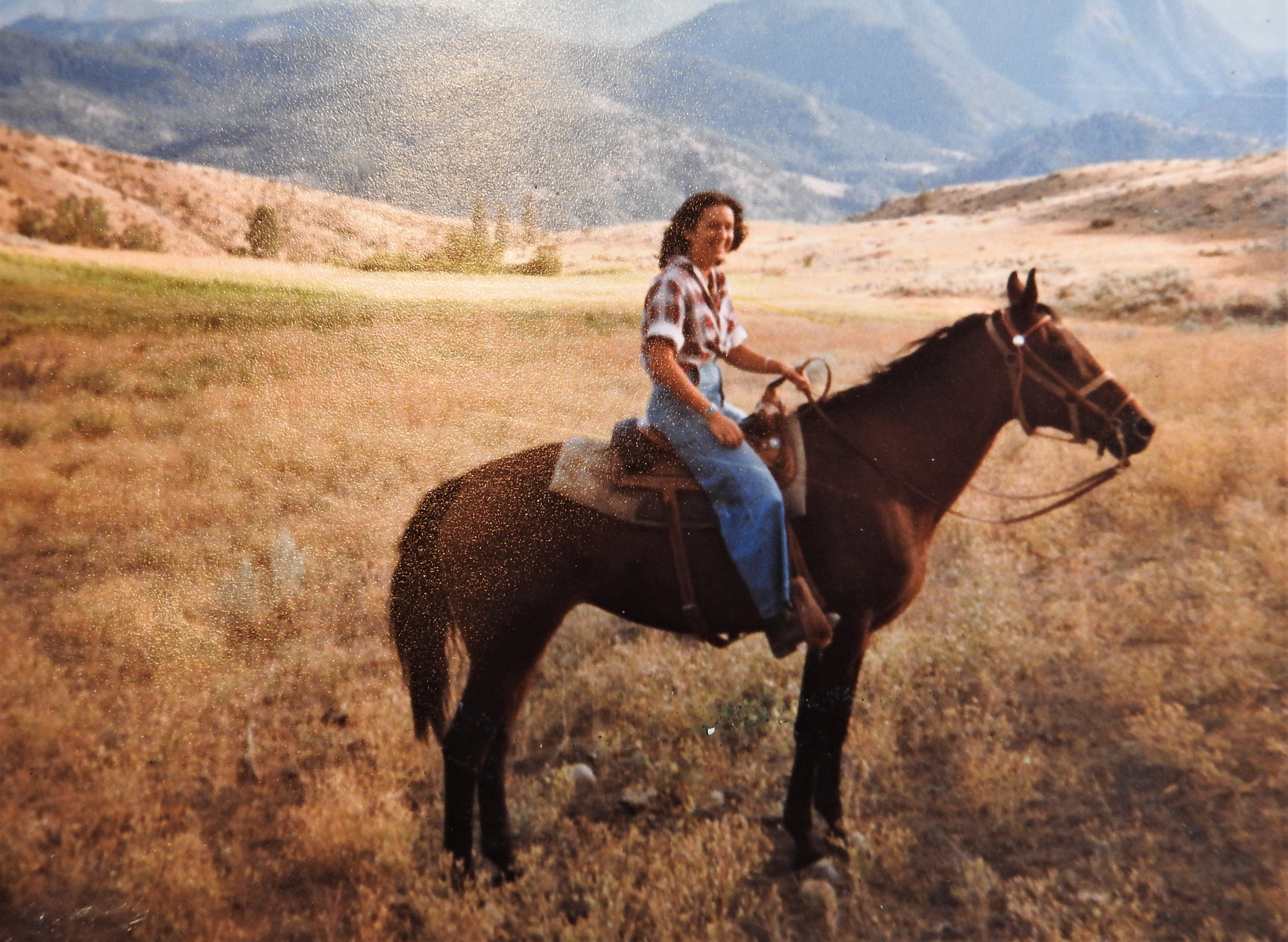
This was always my all-time favorite photo of me. Happy doing the thing I loved most in the whole world — horseback riding in the Methow Valley. I thought this photo had been lost long ago, but while decluttering a storage box, I found the photo in an old envelope. A real decluttering treasure.  Photo was taken in about 1977.

Decluttering Notes

In the process of decluttering, I came across a little red notebook that had about 20 pages of handwritten notes.  I’d set the notebook aside and decided to look through it this morning.  The first few pages were about mental health and self-care ideas.  And then suddenly the pages shifted into decluttering-themed writing.  This is a topic I come back to regularly, it appears.

The basics of these notes were quick tips and a couple of questions for thought.

  1. Break jobs into ten-minute chunks
  2. Make things pleasant (music, air freshener, candles, comfy clothes)
  3. What motivates you to clean?  (Company coming over, Game Nights, holidays)
  4. Favorite Flylady tips:  shine the sink, start with the biggest thing in the room, Baby Steps
  5. Favorite Kondo tips:  does it bring joy, sorting clothes, books (but I keep more than 30)
  6. What purpose do you want your home to fulfill?


Clutter-Clearing “Container”

In the book Clearing Clutter as a Sacred Act, the author Carolyn Koehnline says, “creating order can be messy.”  That’s certainly the truth.  I’m in the stage with my decluttering where some areas look worse now than they did before I started the process.  But I just try to keep my eye focused on the end result I’m hoping for, and just keep plugging away.

In her book, Koehnline suggests putting together what she calls a clutter-clearing container, a place to hold all your clutter-clearing process materials and a way to make sense of the mess that comes from decluttering.  She suggests something like:

  • a 3-ring binder
  • a file box
  • a digital folder

The container is basically a place to store and access notes and writings related to decluttering.  She says to skip this step if it seems too overwhelming for you.  At first, it did sound too overwhelming, but when I found myself reaching for a small steno notebook, I realized having a place to write about the process was a good idea for me.

I don’t feel the need to decorate my journal/container like she suggests at one point.  But I can see how that could be inspiring for some people.  I’m afraid I might get lost in the details of beautifying the journal and lose sight of the process of decluttering.  I think I just need to keep it all very plain and simple.

I also decided that updating my blog and Facebook page with thoughts and observations would give me another place to keep ideas and to keep track of my progress.  When notes from my steno notebook gel into something somewhat cohesive, I’ll share them here for safekeeping.

Things that Koehnline suggests keeping in the clutter-clearing container include:

  • helpful resources
  • details about projects
  • questions for self or others
  • process writing
  • inspirational quotes
  • poems
  • song lyrics
  • scriptures
  • pieces of own writing

I personally am just keeping notes on thoughts that come to me while reading Koehnline’s book, and the pieces of writing that are inspired by her book’s writing prompts, or by the process itself of clearing clutter.

Another idea she shares in her book for including in the container is photographs of “before and after.”  I haven’t included photos in my container(s), but I can see how that could be a valuable part of the decluttering journey.  Since I’ve already completed a few areas of my house, I might take a few “after” photos.  An empty bookcase.  Empty dresser drawers.  Neatly stacked boxes with carefully sorted Christmas decorations.

When I first read about her idea of keeping a clutter-clearing container, it didn’t resonate with me.  But as I found ways of adapting the idea to the way I work and the things that inspire me, it’s become the backbone of my decluttering project.  And also allows me to share my journey with others.

What sort of container do you think you would find helpful?

Decluttering Focus

I’m planning on moving in a year and downsizing in the process.  I hope to declutter enough that I’ll only be moving things with me that matter.  Right now, I have things in my home that I never use, so I’ve been asking myself if these unused items are things I want to haul with me to my next home.  The answer is frequently no.

I took a few minutes to make lists of the areas I need to focus on.

Big Picture Questions

What sorts of clutter do I have?

  • books
  • decorations
  • office supplies
  • clothing
  • bedding
  • games and puzzles
  • art supplies
  • kitchen gadgets and dishes

Which places are the most cluttered?

  • bedrooms
  • kitchen
  • office

How big of an endeavor is this project?

  • an entire house
  • a year’s time frame
  • a little bit at a time

I heard someone talk one time about how sometimes having a meandering focus can be helpful for people like me who can get overwhelmed with firm lists and agendas.  A meandering focus would be keeping the end result in sight, but allowing your time and attention to move organically through the project at hand.

For example, with my decluttering project I can keep the end goal (having things cleared out in a year) in my mind, but allow myself to move throughout the house fluidly as things come to the forefront.  I have most of my bedroom and its assorted closet space and drawers pretty much finished, I started working in the spare bedroom during and after the holidays, because I store much of my Christmas stuff in the closet there.  I’m going to move my focus into my office.  It might seem haphazard to other people, but it helps me to have the freedom to meander around my house as it seems appropriate.

A meandering focus is also like steering a sailboat.  You move around with the wind and waves but keep the destination always in sight.

Decluttering Fears

The book I’m reading, Clearing Clutter as a Sacred Act, had us think about fears we might have that relate to decluttering.

Possible fears:

  • Not completing the process
  • Getting overwhelmed
  • Stirring up emotions; finding triggering objects
  • Regrets over things I part with

What should I do with those fears?

  • Acknowledge them gently.  All of them are real possibilities, so denying them isn’t helpful.
  • Not completing the process is an error in thinking because the process is a process, an on-going process.  There’s not a “finish,” but just a “doing.”  As long as I keep doing, it’s victory.  Even taking pauses in the process isn’t failure.
  • Triggering objects are everywhere in my house, so it’s just a matter of course that I’ll stumble upon them.  The last time I did, I sat quietly, breathed slowly and deeply, and practiced being mindful of my immediate surroundings.  I also talked with someone about it.
  • I might regret some things I’ll part with.  In fact, I already do.  So, I gently acknowledge the regret, I don’t beat myself up about it, and I move forward.

There are probably more fears than this, but these are the ones that came to my mind the first time I thought about it.  I’d actually never thought about ways that fears could potentially interfere with success with clearing clutter.

Decluttering Update

I took down my Christmas things and sorted through the ornaments. I have a lot of ornaments. I was surprised to find an entire box full of ornaments that triggered negative feelings or sadness. I boxed them all up and will be donating them. They will be beautiful, but they need to be on someone else’s tree, not mine anymore.

I’ve started decluttering by clearing the shelves in my bedroom, clearing the drawers in two dressers, gotten rid of several boxes of papers, found important(!) papers, sorted through some games and puzzles, and began working with the drawers in my spare bedroom.

That sounds like a lot of decluttering, but it took place over the course of a couple of weeks, just doing a little big here and there. I never felt overwhelmed or hurried. I just took my time, set small and realistic goals for myself, and smiled when I was done. I find that smiling is proving to be an important aspect of this decluttering journey.

Even when I sorted through the ornaments that triggered sadness, I could still smile because I knew I was clearing space in my life, space that had been cluttered with negative feelings. Yes, I believe that even feelings have the potential to be clutter.

Random Thoughts on Decluttering

Thoughts about decluttering:

I don’t want to carry clutter with me. I want to make a fresh start, with spaces for newness of life to come in.

If I work a little bit every day, the project will be done thoughtfully and thoroughly. I have already begun by clearing some drawers and shelves. I have found bags and boxes to donate, bags and boxes to throw away, and will find the bags and boxes meant to be kept.

There is healing in the clearing. Even when there is pain, there is healing. This process won’t always be easy, but it won’t always be difficult, either.

One room at a time. One closet at a time. One drawer at a time.

I will touch all of it, and all of it will touch me.

I will be my own helper, my own cheerleader, and my own deepest friend and companion on this journey. And throughout the process, I will make room for my Future and for my Future Self.

Proclamation for Clutter Clearing

The book I’m reading (Clearing Clutter as a Sacred Act) had readers identify a person or a thing or a concept to dedicate the clearing process to, and then to write a short proclamation of intention.

“I proclaim that my clutter-clearing process is an act of devotion to my Future, and to my Future Self. As I clear my clutter, I am making room/space for a deeper, more vibrant engagement with my Future, opening myself to new possibilities, and trusting, as I go, that richer treasures will come into my life.”

This weekend, I made a list of the next areas of my house that I need to focus on, and came up with 1) the Master bedroom and bathroom, 2) the spare bedroom closet, and 3) Christmas things. Since I will be taking down my tree and putting away other holiday decor, Christmas things moves to the top of the list.

I’ve found that after some difficult family things happened a few years ago, I can be triggered into great grief and sadness unexpectedly when I come across items with heavy emotional attachments. I’ve moved on to a place in my healing that I can now let go of things that bring me pain without the guilt that used to accompany parting with highly charged items.

I’ve noted that several of the ornaments on the tree this year were bringing me haunting grief when I’d see them, so I’ve decided as I take down the tree, the ornaments that bring pain will be finding their way into the donation box to find a new home. I’ve come a long way. The first couple of years, I couldn’t put up any of my ornaments and just bought a box of inexpensive plain ornaments that I used for a couple of years. Each year since, I’ve taken steps to reclaim my holiday decor. Now what’s on the tree are ornaments that bring me joy and happy memories. It took a while to get to that place.

So, I’m going to start the New Year with clearing holiday clutter. There may be some pain lurking in the process, but I know from experience, there are also steps leading to healing.