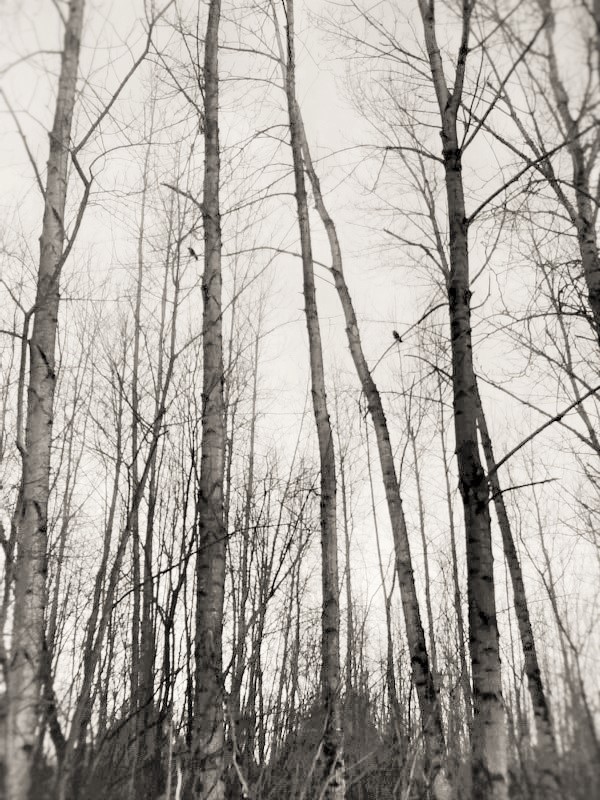
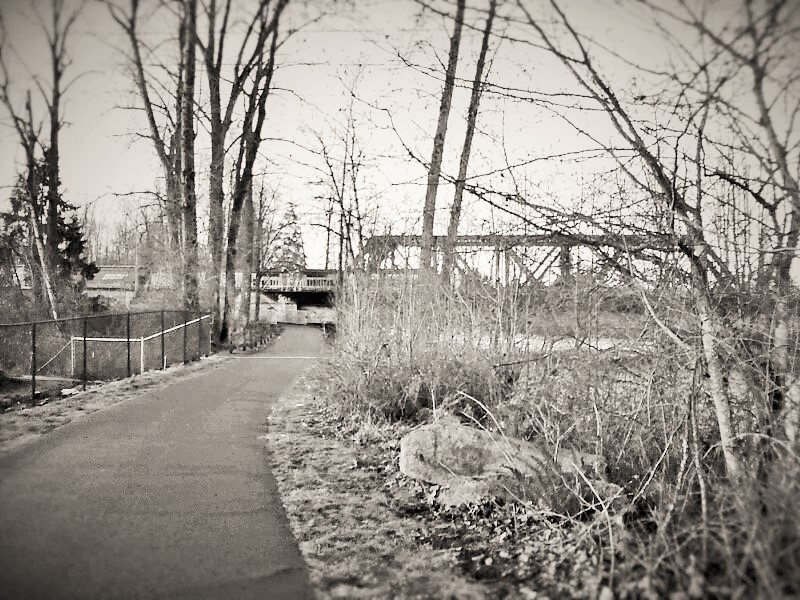
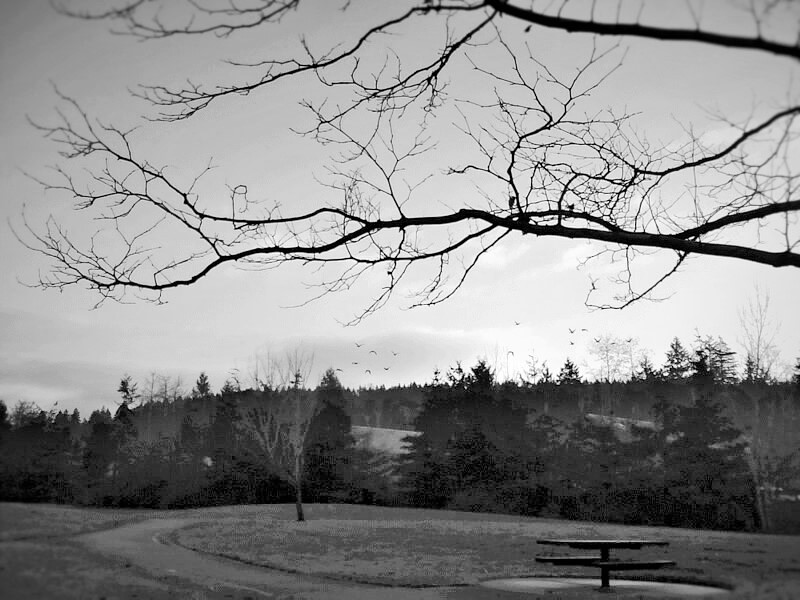
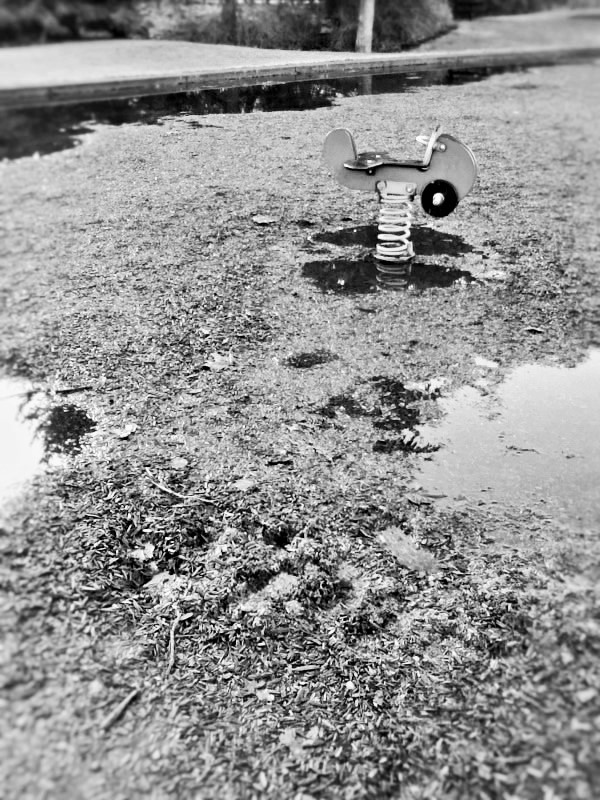
Poem: Erasing Voyager

Experiment in Erasure:

Erasure gives opportunity to share our thoughts but with words we wouldn’t normally choose to use.  We can also identify with the world of the writer through entering into their text deeply.  What we look for or what attracts us in the original work says more about us than about the original work.

This is an erasure poem of Book Two from Voyager, a book of poetry by Srikanth Reddy (pages 19-34).  Our instructions were to use one phrase from each page.


Erasing Voyager

The thought of it roaming
far in outer space
is understandable.
Certainly the china
had mixed emotions.
I expunged
imperialism and corruption
on the Indian sub-continent.
I had tears in my eyes.
The Ottoman Empire,
on a number of occasions,
highlighted the limitations of
nightmare.
Elsewhere in the darkness,
I was intrigued by
the theatres of neutrality.


Poetry Experiment: The “Overflowing” River

An assignment from class this week:

Write a short work, and then write its “overflowing,” providing a kind of poetics that circulates around, extends, and amplifies your text, while being part of it (a text that isn’t separate, without which the “central” text would function completely differently).


Dragging the River

Dragging the river of memory—

In search of her younger self

It’s already too late.

Her life was her torture.

She was capable of imagining

a life outside of housework.

That sense of youth and immortality disappeared

in the destruction of the old familiar.

The river hurtled toward the sea

Inevitable

Don’t look back

or lose her forever


Overflowing River

Dragging the river of memory—

 Dragging the bottom for dead bodies. Dragging on a cigarette. Dragging and slow, they crept forward.  He dragged his accomplishments into every conversation.  The parade dragged by endlessly. It’s a drag having to read this. He was often in drag. The committee often dragged their feet.  Dragging the river.  The bottom.  The muck. The mire. The memory. A time within memory. Improve the memory. Search the memory. Increase the memory.  Lose the memory.  The flow of degeneration swallowed memories like lozenges.  No one can steal your memories.  No one except dementia.  The long good-bye.


In search of her younger self

Searching for answers. A searching glance. A searching mind. A searchlight.  A search party searching for the fountain of youth. Freshness. Vigor. Vitality. Her better self. Self-service is payable to self.


It’s already too late.

 Let’s go already.  They had already arrived. Entirely. Previously.  No longer possible.  The late great life of youth.


Her life was her torture.

The life of the family depended on her obedience to the patriarchal systems in place in their subcultural milieu. Chained. Beaten. Surrendered. Defeated.


She was capable of imagining / a life outside of housework.

 The feminist ideal was foreign. But her imagination was strong. Imagining.  Image-ing.  Imagination was a gateway to the outside. Homemaking wore thin.  She didn’t.


That sense of youth and immortality disappeared

A faculty or function of mind relating to the appearance, freshness, vigor, spirit, and characteristics of one who is young.  Our immortal souls.  The immortal words.  The Immortals vanished into mythology.  Perhaps her life would, too.


in the destruction of the old familiar.

 The wanton demolition of ancient, well-acquainted activities and thoughts.


The river hurtled toward the sea

The current of death.  Flowing lava.  Creeping glacier.  Calving icebergs.  The barren waste of the north.


Inevitable

Certain.  Necessary.  Unalterable.  Unable to escape. Foreshadowed. Foretold. Forewarned is not necessarily forearmed.  The inevitable end of life is death.


Don’t look back

Avoid casting a glance to those things past.  Don’t look it straight in the eye.  Looks can be deceiving.  Even the look of love.  He has the look of an honest man.  Look after your own interests.


Or lose her forever

An existential crisis.  Losing the pillars of her life.  Crumbling beneath the weight of patriarchy.   To die?  Or to be set free?

Poem: Now is a now and this is this


A now is a now is a now

Creating space between self and outside

Inside and out

1st person and 3rd

Disjunctive, disruptive

Find a place, not a position

Not an either/or

But an and and and and and and …

Respect the thing itself

This is this, this is this, this is this—

Rather than this is that


Poem: Dragging the river

by Debi


Dragging the river of memory—

In search of her younger self

It’s already too late.

Her life was her torture.

She was capable of imagining

a life outside of housework.

That sense of youth and immortality disappeared

in the destruction of the old familiar.

The river hurtled toward the sea

Inevitable

Don’t look back

or you lose her forever


An email to CA Conrad

Dear CA …

To have friends you can trust with your own creations
would be, could be, will be, is gonna be—
priceless.

What does it mean to live poetry?

What is the price we pay to be a poet?
We love, we suffer, we die, we cry
This seems a high price to extract
from ourselves
for the privilege of creating
and revealing
all within.

What lessons are we learning in everyday everything?
Have we become so habituated to the habitual
that we are unable to see
the soma in the somatic?

~Debi

Playing Around with Shakespeare: “But soft!” – Antonyms

Playing around with Shakespeare …

Antonym Substitutions – “But soft!” Monologue

But stonelike! What duskiness through nearby doorway restores?
It is the West, and Juliet is the moon!
Lie down, mediocre moon, and enliven the undesiring star.
Who is not healthy and dark with joy
That thou her gentleman aren’t less ugly than she.

Poem: Innocence Lost


by Debi


Once upon a time there was a girl …

An older friend
A friendly hand
Shhhhh.
Keep still.   Our secret.

Once upon a time there was a girl …

Let’s play.
Striptease. Doctor.
Sexy Barbies.
The childhood games of victims.

Once upon a time there was a girl …

Scoot closer. Where I can reach.
Always reaching.
Shhhhhh …
Don’t tell. Don’t ever tell.

Once upon a time there was a girl …

A tiny child.
Robbed of
Innocence.
Before she even knew the word.


Experiment: [Soma]tic Experience ala CA Conrad


[Soma]tic Experience (inspired by CA Conrad)

by Debi


INSTRUCTIONS:

I will not brush my hair.  I will not put on make-up.  I will not wear shoes.  I will spend 15 minutes of quiet, uninterrupted time sitting on my living room couch while holding—one at a time—five of my pets (3 cats, 2 bunnies).  Each pet will get 15 minutes alone with me, so this will be about an hour and an half of sitting on the couch with animals.

I will alternate cat/bunny/cat/bunny/cat, and will quietly take notes on my laptop while doing nothing else but appreciating/petting/noticing whichever animal is currently in my lap.  Notes will be whatever random thoughts or observations I have while holding the animal.

I will leave the notes for at least 10 hours, then return to the notes, reread them carefully, see if any ideas take shape, and then compose a poem(s) or prose from any resulting inspiration.


RESULT:


“YOU and ME vs. HE and SHE”

US —

Curious loving relaxed trusting tender sensitive soft beautiful

THEM –

Ferocious cold wild glaring green-eyed impatient jealous demanding dangerous

THEN –

Painful needy vulnerable desperate blue

NOW –

Perceptive protective depth security strong fearless alert

FUTURE –

No fear of the hunter / no longer the hunted


THOUGHTS:

Hm.  Interesting experiment.  The resulting “poem” is weird but actually quite meaningful to me … although I’m certain it makes little (if any sense) to anyone else outside of my head.  It also has nothing whatsoever to do with cats and bunnies. 😉

Poems: A Photographic Tanka Journey

I’m still messing around with the Walks and trying to decide how to format them, write them, etc.  Should they be recorded in a diary-style?  Or prose?  Poetry?  A series of tankas?  Free-form poems?  Or should I just give it all up?  😉

So this is the latest incarnation of Walk #1 and a complete experiment. I’ve never written tankas before.  A tanka is usually a five line Japanese poem with the syllable count of 5-7-5-7-7.  The idea to try my hand at tankas written about walks in city parks was inspired by reading Urban Tumbleweeds: Notes from a Tanka Diary by Harryette Mullen.


Walking Roegner Park:  A Photographic Tanka Journey

by Debi


Sun barely risen

Empty, cold I start to walk

Well-trodden concrete

Right or left, is the question,

To take the trail less traveled?

river with sun (2)


Choose the river path

Sound of crows, footfalls, river

Soggy from night’s rain

The wind is quiet today

Grasses bent from prior storms

trees with a crow (2)


Crows are still scolding

Following me as I walk

Same crows or others

Passing their scolding to friends?

In the distance, train whistling

train on bridge (3)


Sound of cars, river

The train’s crossing the bridge now

Graffiti’d roadway

A city park, not country

Impervious surfaces

grafitti (3)


A pair of mallards

Sun is beginning to shine

White puffy berry

Too wet to pop, it went squish

An albino cranberry

White_Berries_by_dsimple (2)


I notice more birds

Sparrows, chickadees, finches

A flock of flickers

A pilated woodpecker

Gaggle of south-flying geese

geese (3)


Abandoned playground

In the midst of a puddle

Surface reflects sky

The mud sucks at my new shoes

Vanity wins, I move on

playground (2)


Playing detectives

Lots of mem’ries at this park

Kids playing ‘gators

Stop!  Don’t touch the hot lava!

Nearly twenty years ago

toy and footprints in mud (3)


Do people ride here?

A rail for tying horses

Park coming alive

Dog walkers, German shepherds

Hello car, time to go home

horse rail (2)


http://www.slideshare.net/debihough1/slideshelf