Poem: The Game is to Listen


Cento (collage poem)
Source Text: The Sense of Wonder by Rachel Carson


the game is to listen
becoming receptive to what lies around you
sound that is felt almost more than heard
the fairy chiming comes
tiny wisps of sound
so ethereal, so delicate, so otherworldly

in the dawn chorus one hears the throb of life itself
the voices of living things
rhythmic and insistent
so fresh and alive
the sound of the insect orchestra
the wild medley of voices
the repeated refrains of nature

a monotonous night chant
swells and throbs night after night
from darkness to darkness
the chorus picks up volume
listen to the wind
the song of the wind
the insistent wind
it blows with majestic voice
a many-voiced chorus

the majestic sound of thunder, the winds,
the sound of surf or flowing streams
the vast roaring ocean
a fierce rhythm
recognition of something
beyond the boundaries of human existence
where great and elemental things prevailed

Poem: Learning a love of nature


Cento (collage poem)

Source Text: The Outdoor Life of Children


The child who sees

his mother

with reverent touch

lift an early snowdrop to her lips

learns a higher lesson

than the “print-books”

can teach

Poem: A Stray Sense of Comedy


Cento (collage poem)
Source Text:  The Midnight, by Susan Howe


The jester walked in the garden

with his luggage on his back.

A stray sense of comedy.

He particularly enjoyed the edges of woods,

neglected stretches of cucumbers,

the cat and spilled flowers.

The garden had fallen still—

A fine and flawlessly pastoral retreat.

Poem: Come Away


Cento (collage poem)
Source Text:  The Midnight, by Susan Howe


Come away,

Away children.

This is a space

children used to play.

A pirate … a soldier …

a guide in the Adirondack wilderness.

Come away—

This way,

this way.


Poem: The Midnight (cento)


Cento (collage poem)

Source Text:  The Midnight, by Susan Howe


The Midnight

Who are they that fly as a cloud

from wilds and mountains?

Fair maiden of cloudlight,

You are wild,

indifferent as twilight.

She retreats into the woodland

her laurels still fresh–

wildeyed–

conversing with an invisible spirit–

in danger of being promoted

to the witch category.


Poem: Nature’s Beauty


Cento (collage poem)

Source Text: The Outdoor Life of Children


O, student of Society and History,

we were all meant to be naturalists,

each in his degree.

It is inexcusable to live in a world

so full of marvels,

of plant and animal life,

and to care for none of these.

Consider the lilies of the field

the fowls of the air.

Things worth observing —

to be watched from day to day:

— the departure and return of the birds with the season

— the portly form and spotted breast of the thrush

— a jay flying across a field

— the graceful flight of the swallow

— the yellow bill of the blackbird

— the gush of song which the skylark pours from above

while perching in a tree.

Make the acquaintance of a wild flower —

every common miracle

in all its fairy beauty.

Observe the wood and pith in the hazel twig

— the downy catkins of the willow

— the flower comes, each shut up in the dainty casket we call a bud

— the little ruby-eyed pistil late-flowers of the hazel

— leaves, branches, bark, trunk of trees.

Every plant bears fruit,

fruit and seed after his kind.

Nature —

the Divine thought

the mystery of beauty

Experiment: “What’s New? What’s Now?”


Now.  What do we mean this is now? Then was now.  But now, then is not now. Because now it’s then, and not now.  My head’s now spinning.  Or then my head was spinning.  Or is it still spinning?  Is it spinning now?  Was it spinning then?

Stop!  Let’s talk about new.


New.  New compared to what?  Antiques?  Old-fashioned?  Retro is old.  Mid-century Mad Men décor, architecture, fashions, colors.  Retro is new, too.  Hip and cool now.  Hip and cool then.  But in between?

Ugly.  Oh my god, was it ugly.


Mad Men.  Grandpa and Dad’s era.  Bourbon on the lunch hour.  Wives with overly sprayed hair-do’s.  Were there hair “don’ts”?  When mom cut my hair, that was a hair don’t.

Bangs.  Never cut them straight across.


Green.  Then, it was a color. Now, it’s a way of life.  Then, we shopped thrift stores because we were poor.  Now, we shop thrift stores to be cool.

Recycling.  Even what’s cool is recycled.


Science.  Then, we thought it would save us.  Now, science tells us the planet’s dying.

Senseless.  Now, some deny science.


Then.  There was life.

Now, too.

Experiment: Forbidden Topics


“Forbidden Topics”

(Inspired by Don’t Let Me Be Lonely: An American Lyric by Claudia Rankine)


When I was two, my mother went to the hospital to give birth to her second child.  But came home with vacant arms, a missing uterus, and erased dreams of the ideal two-child family.  Because I was so young, nobody told me what had happened. But my earliest memories start around that time.

One of my first memories of my mother is finding her sitting alone in her bedroom, sobbing with a grief I’d never imagined could exist.  Was she thinking about her lost child?  Her lost uterus?  Her lost dreams?  It scared me.  Then I started crying.  Mom held me, and rocked me in her arms.  We cried together.

Looking back now, I assume she cried for her various losses.  I cried for a loss, too.  The loss of security.  Of feeling my mother could protect me from the great sorrows of life.  If mom was unable to keep sorrows away from herself, I knew there was no way she could keep sorrow away from me, either.

I spent most of the next year living with my grandparents while my mother was in a mental hospital/asylum with what today would probably be considered a severe case of post-partum depression.  I’m sure it was a great sorrow for a two-year-old child to be separated from her mother for that long. I guess I didn’t need to wait long for that prophetic feeling of approaching sorrow to reach my life.

Back then, what did they call what mom suffered from?  A nervous breakdown?  Mental instability?  Depression?  A momentary loss of happiness?  I asked my uncle, my mom’s youngest brother, about it.  He remembers she went to a mental hospital up north somewhere.  In Burlington or Sedro Wooley.  But he was in junior high at the time and had preteen dramas of his own to think about.  His memories of what was happening with his married older sister are spotty at best.  He does remember something about electric shock therapy.

My dad never talked about it.  Ever.  Mom’s hospitalization was a forbidden topic.

Our family had a number of forbidden topics.

Poem: Wonder and Admire

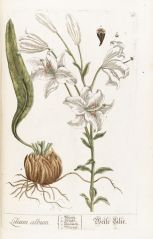
lilyCento (collage poem)

Source Text: The Outdoor Life of Children


Wonder and admire —

Consider the lilies of the field, how they grow,

from the ploughing of the land

to the getting of the crops.

By-and-by there is fruit.

Meadow and pasture,

clover, turnip, and corn field.

Some lovely flower or gracious tree,

the movement of branches,

shadows of boughs making patterns

on the white tablecloth.

Hum of bees.

Shines forth the blushing flower

to blossom —

to germinate —

to bear fruit —

Milkwort, eyebright, rest-harrow, lady’s bedstraw,

willow-herb, every wild flower.

Break off an elder twig in the spring

— describe the leaf

— the manner of flowering

— the dangling catkins

— rough or smooth leaves

— rough or smooth bark

Stare up into a tree or down into a flower

to see

the sublime

tender and living sculpture.